
The Spring Reset: Lymphatic Drainage, Gut Health & Sustainable Nutrition.
The Spring Reset: Lymphatic Drainage, Gut Health & Sustainable Nutrition. Home / Blog As a
Massage Therapy In Marylebone, London By Marta

Facial trends come and go, but buccal massage has stayed firmly in the spotlight. From celebrity red carpets to TikTok videos, everyone seems to be talking about this intraoral facial massage that promises a more sculpted jawline, relaxed cheeks and relief from jaw tension. If you are searching for “buccal massage London” or “buccal massage near me” and wondering whether it’s really worth it, this guide is for you.
At its simplest, buccal massage is a specialised facial technique that works on the muscles of your cheeks and jaw from both the outside and the inside of the mouth. “Buccal” refers to the inner cheek area – so yes, during this treatment your therapist places gloved fingers inside your mouth while supporting and massaging the same tissues from the outside.
Unlike a standard face massage that stays on the skin’s surface, buccal facial massage targets deeper layers: intraoral muscles, fascial tissues and the areas where we tend to clench and hold stress.
Because it works so deeply, buccal massage is often described as a combination of:
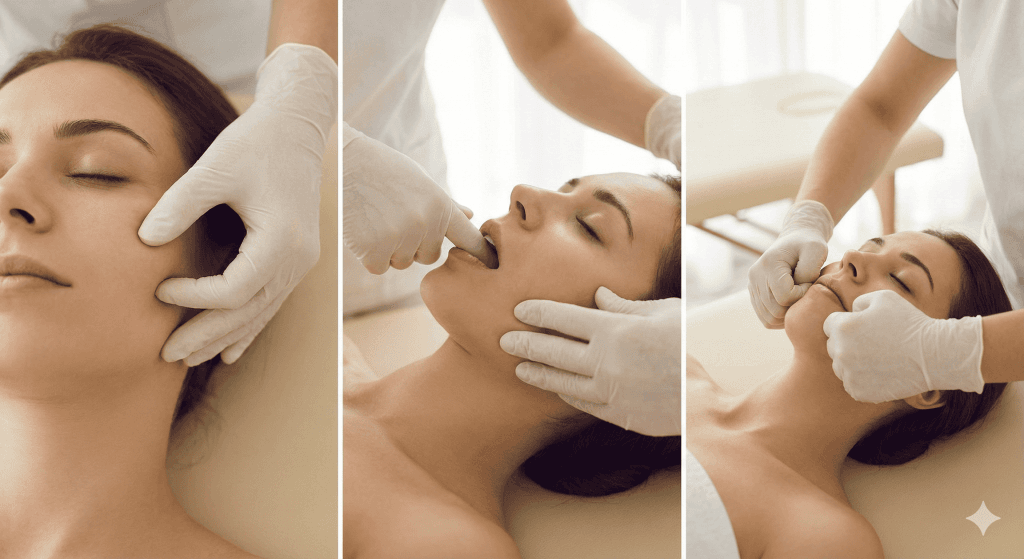
Every practitioner has their own style, but a typical buccal massage in London with me looks like this:
This intraoral buccal massage may feel unusual at first, but most clients quickly relax and describe a sense of “finally letting go” in the jaw and face.
Done correctly, buccal massage can offer both cosmetic and therapeutic benefits. Research on intraoral myofascial therapy – a closely related technique – suggests that working inside the mouth can help improve pain and function in people with chronic temporomandibular disorders (TMD).
People often book buccal facial massage for its visible effects, which may include:
For many people, buccal massage feels like a natural, non-invasive alternative to more aggressive treatments such as fillers or buccal fat removal.
Because it targets deep jaw muscles, buccal massage can also help with:
On top of that, the face is incredibly expressive. Releasing tightness here can feel surprisingly emotional and deeply calming, much like a good deep tissue or Signature Massage does for your shoulders and back.
If you grind your teeth, wake up with a stiff jaw, or experience clicking and aching around the joint, you might be asking whether buccal massage for TMJ is worth trying.
Evidence from small clinical trials on intraoral myofascial therapy suggests improvements in jaw pain, mouth opening and overall function compared with no treatment, especially when combined with education and self-care.
However, it’s important to be realistic:
In clinic, I find buccal massage especially helpful for clients whose jaw tension is driven by stress and posture and who already follow advice from their dentist or doctor.
You’ll see plenty of dramatic “buccal massage before and after” photos online, but in real life results are usually:
Most clients leave their first buccal massage in London session saying things like “I didn’t realise how tight my jaw was” and noticing a softer, more relaxed face in the mirror.
Any honest discussion of buccal massage needs to cover safety. Most people experience only mild side effects such as:
You should not book buccal massage if you have:
If you’re unsure, talk to your dentist, GP or a qualified therapist before booking.
Clients often compare buccal massage with more familiar options:
There’s no single formula, but a typical buccal massage London plan might look like:
We decide frequency together based on how your jaw responds, your stress levels and your goals – whether that’s purely cosmetic or more about comfort and pain relief.
So, is buccal massage worth it?
In my experience, the answer is yes – for the right person, at the right time.
It’s likely worth considering if you:
It may not be worth it if you:
When combined with good sleep, stress management and perhaps a Signature Massage or Manual Lymphatic Drainage, buccal massage can be a powerful way to support both your appearance and your wellbeing.
It’s a face massage that includes work inside your mouth. The therapist wears gloves and gently massages your cheeks and jaw from the inside while supporting the outside of your face.
For most healthy people with no active dental or skin issues, buccal massage is generally safe when performed by a trained practitioner using proper hygiene. There is a small risk of soreness, which is why screening and aftercare are important.
Light facial massage at home is fine, but full intraoral buccal massage is best left to professionals. Doing deep work inside your mouth without training can irritate delicate tissues or make TMJ symptoms worse.
You’ll usually notice softer features and less puffiness for a few days after your first buccal massage. With a course of treatments and maintenance, changes can last for weeks or longer, especially if you also manage stress and jaw habits.
Most people describe it as intense but not painful – similar to having tight muscles stretched. You might feel tender the next day, like after a workout, especially if your jaw was very tight to begin with.
Prices vary widely in London depending on location and therapist experience. Generally, buccal massage is priced similarly to advanced facial or specialist bodywork sessions. As a guideline, expect it to cost more than a basic facial but less than most injectable procedures.
It can still be worthwhile, but timing matters. Most practitioners recommend leaving a gap between injectables and buccal massage to avoid disturbing fresh work. If in doubt, check with both your injector and your massage therapist.

Marta Suchanska is the founder of MɅSSɅGE, a Certified Massage Therapist, Nutritional Therapist, and final-year student of Osteopathic Medicine based in Marylebone, London. With over 10 years of experience, she specialises in a holistic, personalised approach to women’s health and chronic pain. Marta’s mission is to address root causes, helping clients restore balance and long-term wellbeing.
Book Your Massage in Marylebone
Ready to experience the benefits of regular massage?
Book your personalised session at our Marylebone clinic today.
Call us or use our online booking system to schedule your appointment and start your wellness journey.
The Spring Reset: Lymphatic Drainage, Gut Health & Sustainable Nutrition. Home / Blog As a
Deep Tissue Massage London vs Myofascial Release London: An Expert Guide Home / Blog If