
The Spring Reset: Lymphatic Drainage, Gut Health & Sustainable Nutrition.
The Spring Reset: Lymphatic Drainage, Gut Health & Sustainable Nutrition. Home / Blog As a
Massage Therapy In Marylebone, London By Marta
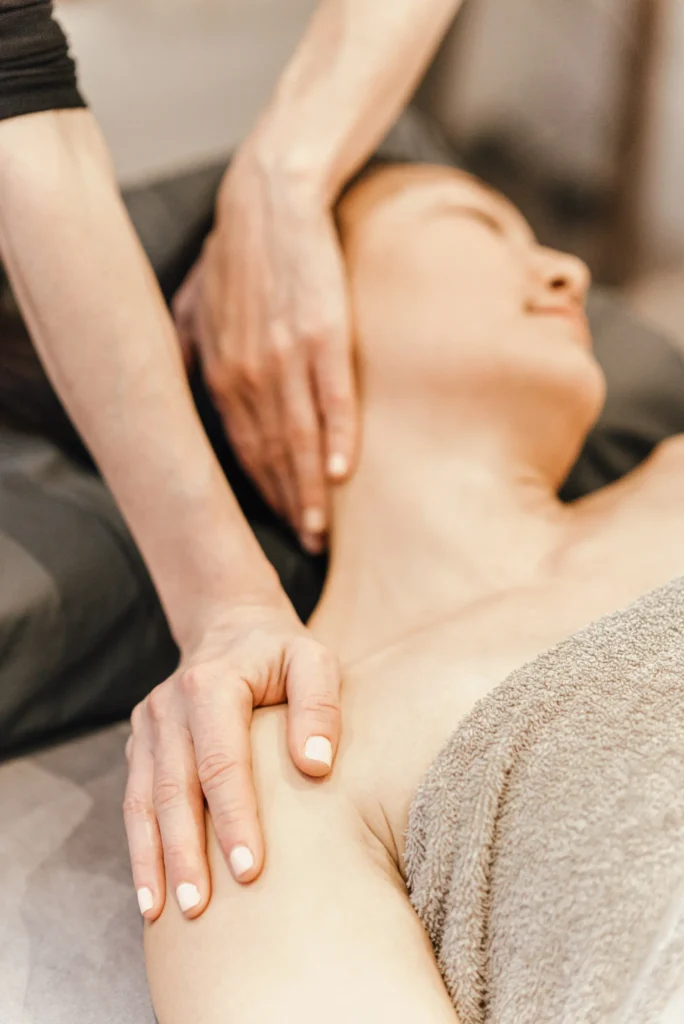
Buccal massage is everywhere right now — often framed as a natural “face lift” or a shortcut to a sharper jawline. But what does buccal massage actually do, and what can science realistically support?
In this evidence-led guide, we explain the technique through anatomy, physiology, and published research — including clinical evidence for intraoral myofascial therapy in jaw-related muscle pain and objective imaging work that measured short-term soft-tissue changes after facial massage. [1][2] We’ll also be clear about what is still not proven long-term, because scientific credibility matters more than hype. [8]
Buccal massage (also called intraoral massage) is a manual technique where a therapist works both outside and inside the mouth (with sterile gloves) to treat deeper facial muscles and soft tissues that are difficult to access externally. In practice, it’s frequently discussed in the context of jaw tension, clenching patterns and facial tightness. [4][5]
Which muscles and tissues are involved?
Most buccal facial massage protocols focus on the:
Some research exploring objective facial massage effects discusses measurable changes in soft tissues and layers such as the SMAS (superficial musculoaponeurotic system), which is relevant when people talk about “lifting” or contour changes. [2][7]
A classic facial massage mostly treats tissues externally. Buccal face massage adds intraoral access, meaning tension points in the cheek/jaw complex may be approached from angles you can’t reach from the outside. That’s part of why it can feel more intense and more targeted — especially around the jawline. [1][5]
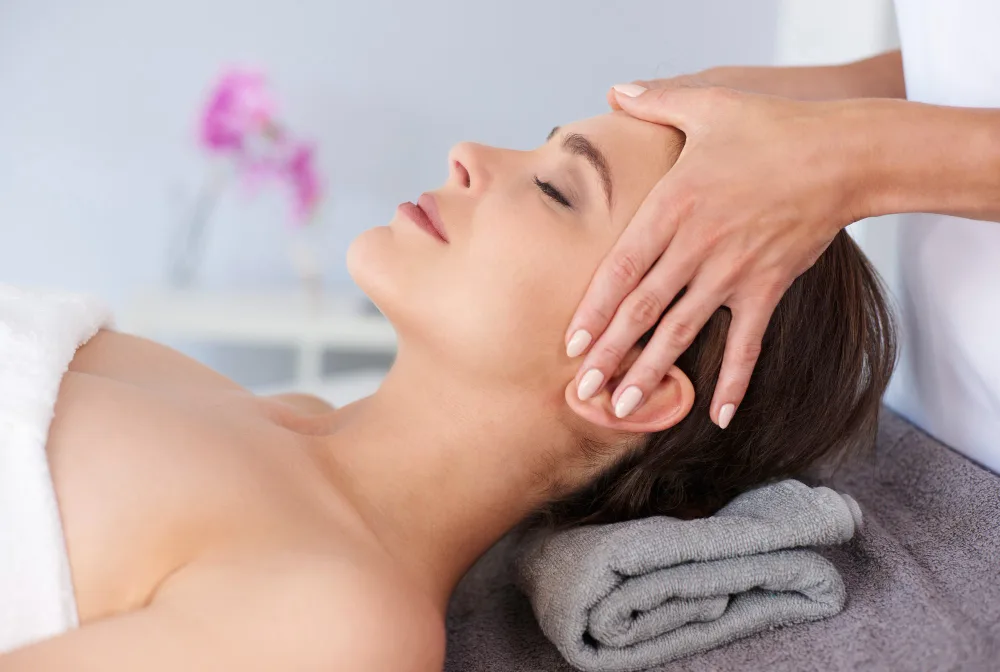
To keep this evidence-based, it helps to separate mechanisms (what could happen in the body) from outcomes (what you can reliably expect to see). Where research is limited, we’ll label claims as plausible rather than proven. [8]
1) Circulation and microcirculation
Massage can temporarily increase warmth and create a short-term “freshness” effect. That may relate to transient changes in circulation and tissue hydration. However, these effects do not automatically translate into long-term structural anti-ageing. [8]
2) Lymphatic flow and facial puffiness (what is plausible)
A “de-puffed” look after buccal massage is often explained via fluid redistribution and lymphatic movement. Manual lymphatic drainage (MLD) techniques have been evaluated in evidence reviews, supporting that manual approaches can influence swelling management in some contexts. [3]
But it’s important to stay realistic: everyday facial puffiness is influenced by sleep, salt, alcohol, hormones and stress — so results are usually short-term, even if they look great in “before and after” photos. [3][8]
3) Neuromuscular effects: tension reduction and pain modulation
This is where the strongest rationale sits. Clenching and bruxism can keep jaw muscles — especially the masseter — in a chronically overactive state. Skilled manual therapy may reduce tenderness, lower protective muscle guarding, and improve comfort during jaw movement.
Crucially, there is clinical research supporting intra-oral myofascial therapy as a relevant approach for myogenous temporomandibular disorder (TMD) outcomes such as pain and function measures. This aligns well with the therapeutic logic behind intraoral work. [1][4][5]
4) Soft-tissue mobility, fascia and measurable short-term tissue changes
Many clients say their face “moves” differently after buccal massage. A plausible explanation is improved soft-tissue mobility (how layers glide) and reduced local stiffness.
There’s also preliminary objective evidence: a pilot study using CT-based analysis reported measurable short-term changes in cheek soft tissue position after facial massage. This supports the idea that detectable changes can occur — but it still does not prove durable, long-term reshaping. [2][7]
Stronger evidence: jaw tension / myogenous TMD
A randomised clinical trial compared intra-oral myofascial therapy versus education and self-care for chronic myogenous TMD. Outcomes included pain and mouth opening range, supporting intraoral manual therapy as clinically relevant for jaw-related muscle pain/function. [1]
This is important for honest marketing: the evidence is strongest for tension and pain/function, not for long-term cosmetic “anti-ageing” claims. [1][8]
Early/limited evidence: facial contour changes
Objective imaging research suggests facial massage can create measurable short-term tissue shifts. These findings are interesting and supportive of short-term aesthetic changes, but they require cautious interpretation due to sample size and limited follow-up. [2][7]
What we still don’t have (and why it matters)
For buccal massage marketed primarily as “anti-ageing,” robust long-term controlled trials proving durable changes in wrinkles, skin laxity or contour are limited. Some expert commentary explicitly cautions that strong claims can outpace evidence. [8]
Jaw tension, clenching and stress-held tightness
If your main complaint is tight jaw muscles, clenching-related discomfort, headaches linked to jaw tension, or “held” facial tightness, buccal/TMJ-focused work is one of the most rational applications. It targets the chewing muscles and intraoral tissues directly, and it pairs well with conservative self-care strategies.
NHS patient guidance commonly recommends self-management approaches (habit awareness, gentle exercises, symptom education) for TMJ-related issues, which can complement hands-on work. [4][5][6]
Puffiness and “sculpting” (usually short-term)
Buccal facial massage may temporarily reduce puffiness by influencing fluid distribution and tissue tone. Evidence that manual techniques can affect swelling exists in MLD-related literature, but everyday facial puffiness is multifactorial — so results are typically transient. [3][8]
Nervous system downshift and indirect benefits
Relaxation may indirectly support facial appearance by reducing clenching patterns and improving sleep — both of which influence how the face looks day-to-day. [5][8]
Buccal massage should be performed with sterile gloves, good hygiene and clear communication. Avoid or postpone buccal massage if you have:
If you’ve had recent injectables (Botox/fillers), discuss timing with your provider.
Why “buccal massage how to” DIY can backfire
The inside of the mouth contains delicate tissues and complex anatomy. Too much pressure can irritate tissues and provoke protective jaw guarding — the opposite of relaxation. If you have TMJ symptoms, conservative self-care guidance from reliable clinical sources is a safer starting point, and professional evaluation can be appropriate when symptoms persist. [4][5][6]
Short-term (same day) changes can include:
Longer-lasting improvements usually require consistency and habit work — especially if clenching is the main driver. NHS leaflets focus strongly on self-management and behaviour change for TMJ-type issues, which fits this reality. [4][5][6]
A pragmatic, evidence-aligned approach is to treat it like other manual therapy: start with a short series, reassess, then maintain as needed. [1][4][5]
Choose someone who treats buccal massage as anatomy + hygiene + consent, not a social-media stunt:
If you run a practice, it’s also worth linking internally to related services for a coherent evidence-led journey, e.g. Buccal/TMJ massage, myofascial release, or manual lymphatic drainage (with realistic expectations).
What is buccal massage?
Buccal massage is an intraoral technique where a trained therapist works on facial and jaw muscles from inside the mouth and outside the face to address tension and soft-tissue restriction. [4][5]
What does buccal massage do?
Most supported: tension reduction and jaw-related comfort/function. Puffiness relief can happen, but it’s typically short-term. [1][3][8]
Is buccal facial massage scientifically proven for anti-ageing?
There is early imaging evidence for measurable short-term soft-tissue changes after facial massage, but robust long-term trials proving durable anti-ageing outcomes specifically for buccal massage are limited. [2][8]
Buccal massage before and after — why does it look different?
Often due to short-term changes in swelling/fluid distribution, muscle tension and tissue tone. Those effects can be real — just not necessarily permanent. [2][3][8]
Buccal massage how to — can I do it myself?
Gentle self-work is possible, but intraoral techniques are easy to overdo and can irritate tissues. For TMJ symptoms, conservative self-care guidance from NHS leaflets is a safer starting point. [4][5][6]
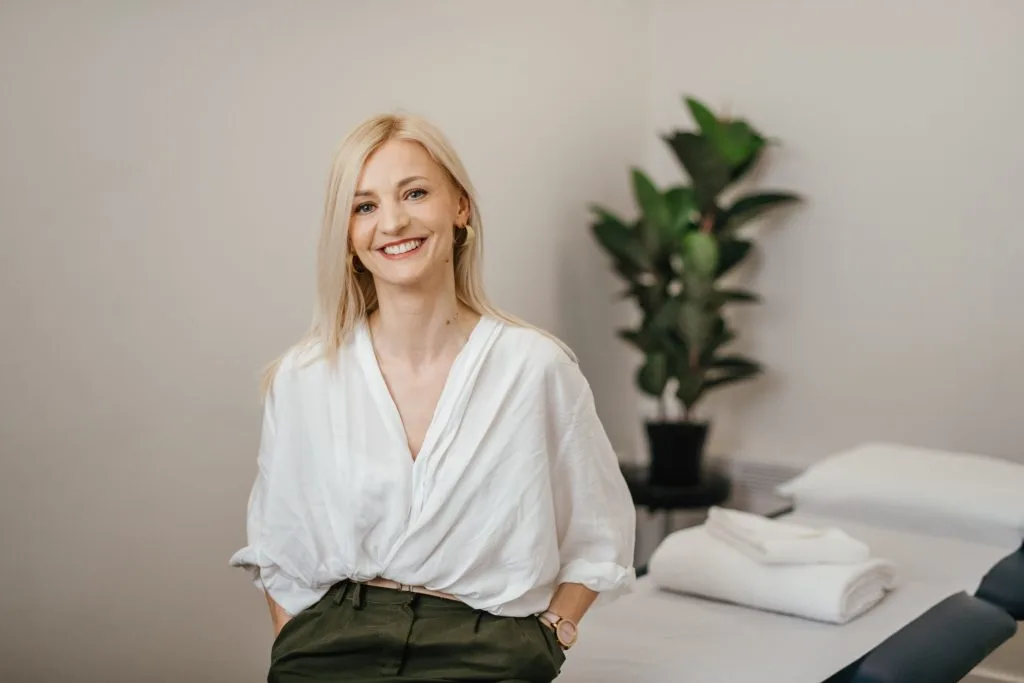
Marta Suchanska is the founder of MɅSSɅGE, a Certified Massage Therapist, Nutritional Therapist, and final-year student of Osteopathic Medicine based in Marylebone, London. With over 10 years of experience, she specialises in a holistic, personalised approach to women’s health and chronic pain. Marta’s mission is to address root causes, helping clients restore balance and long-term wellbeing.
Book Your Massage in Marylebone
Ready to experience the benefits of regular massage?
Book your personalised session at our Marylebone clinic today.
Call us or use our online booking system to schedule your appointment and start your wellness journey.
The Spring Reset: Lymphatic Drainage, Gut Health & Sustainable Nutrition. Home / Blog As a
Deep Tissue Massage London vs Myofascial Release London: An Expert Guide Home / Blog If